With the introduction of Computational Thinking and Artificial Intelligence into the CBSE curriculum for Classes 3–8, schools across the country are preparing to equip students with the problem-solving and analytical skills needed for an increasingly technology-driven world.
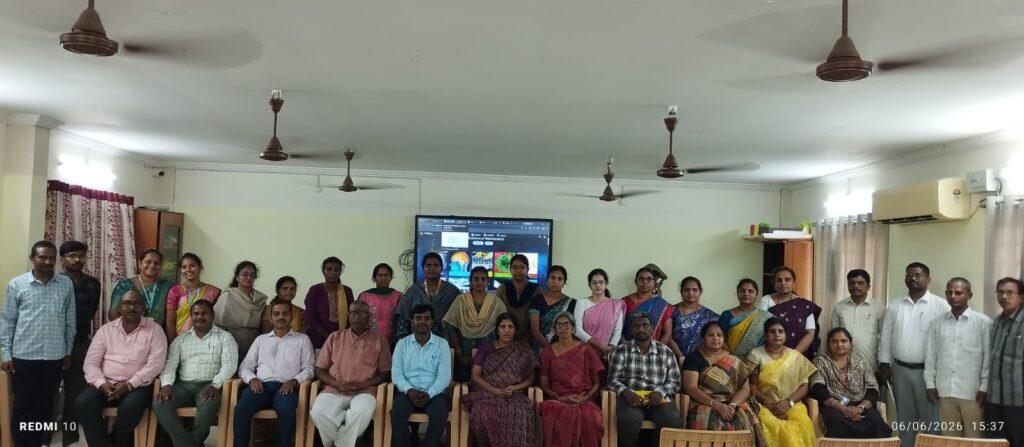
To support this transition, The STEM Makers recently conducted a hands-on teacher training workshop, focused on understanding and implementing the new curriculum. The workshop was attended by 39 teachers from 13 schools ( Vijnana Vihara E.M. High School, Enikepadu, Nutakki, Viva The School, Namburu, Sadhguru Silver Oaks School, Nellore, SKPVV Dokuparti Upendra High School, Jakkampudi, St. John’s English Medium School, Vijayawada, Tenali, St. John’s Nexus High School, Vijayawada, N. St. Mathew’s Public School, Vijayawada, Delhi Public School, Amaravathi, Aravinda Model School, Mangalagiri, Aravinda High School, Aravinda CBSE School, Kunchanapalli).

The workshop began with an overview of the newly introduced CBSE curriculum and its objectives. Teachers were guided through the structure of the curriculum, expected learning outcomes, pedagogical approaches, and assessment recommendations.

A significant part of the discussion focused on how the Computational Thinking curriculum maps onto the existing Mathematics curriculum. Participants examined the similarities, differences, and progression in complexity between traditional mathematical reasoning and the newly introduced Computational Thinking competencies. This analysis helped teachers appreciate that Computational Thinking is not merely coding but a structured approach to problem-solving that complements and extends existing classroom practices.

The workshop reinforced an important message: Computational Thinking is not another subject to be memorized. It is a way of thinking that enables students to analyse problems, develop solutions, and make informed decisions.
As schools begin implementing the new CBSE curriculum, teacher preparedness will play a crucial role in its success. Through hands-on experiences, collaborative learning, and practical classroom strategies, educators can confidently guide students toward becoming creative problem-solvers and responsible users of emerging technologies.
The enthusiastic participation and thoughtful discussions throughout the workshop demonstrated a shared commitment among educators to preparing students for a future where Computational Thinking and Artificial Intelligence will be essential life skills.

The STEM Makers remains committed to supporting schools and teachers in this journey through meaningful, hands-on STEM education and professional development programs.
Reach out to enquire about the upcoming Computational Thinking and Artificial Intelligence training sessions for your teachers or to organise one for teachers at your school.